速看!12月明星蛋白清单,高效科研之选
本期云克隆精选重组蛋白、活性蛋白、热门靶点蛋白三大核心品类,全面覆盖分子互作分析、细胞功能实验、药物高通量筛选等关键研究场景,为你的科研项目提供精准支撑。所有产品均遵循顶刊同款制备配方,或经权威实验室多轮严格验证,溯源可查、数据精准,从源头规避实验变量。
选择云克隆优质蛋白,帮你跳过反复试错的耗时环节,降低实验不确定性,让科研进程更高效、成果产出更稳健,加速论文发表之路。云克隆愿以可靠品质,陪伴每一位科研人,稳步探索生命科学的未知疆界。
01 ADM
产品货号:APA220Mu01
产品名称:肾上腺髓质素(ADM)活性蛋白
文献名称:METTL14 integrates tumor-derived SAM to drive parabrachial epigenetic rewiring in pancreatic cancer
杂志名称:Neuron
影响因子:15.0
PMID/DOI:10.1016/j.neuron.2025.10.002
发表日期: 11/1/2025
发表单位:中国广东省广州市肿瘤防治中心中山大学肿瘤防治中心麻醉科
样本类型:小鼠外侧臂旁核谷氨酸能神经元(LPBN)
应用类型:细胞培养
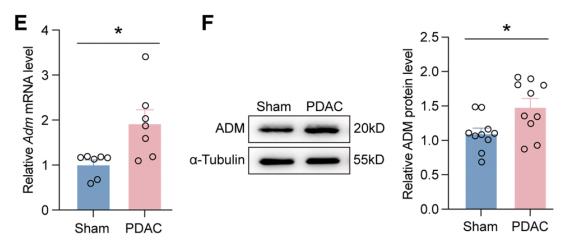
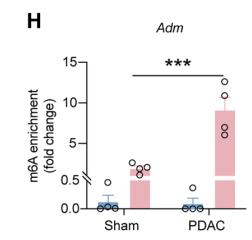
METTL14-mediated m6A modification drives comorbidity via ADM in LPBN glutamatergic neurons(E) LPBN Adm mRNA expression (n = 7). (F) ADM protein levels in the LPBN (n = 10). (H) MeRIP-qPCR measuring m6A levels on Adm mRNA in LPBN (n = 4).
02 CX3CL1
产品货号:APA040Hu01
产品名称:趋化因子C-X3-C-基元配体1(CX3CL1)活性蛋白
文献名称:Heat Stress Modulates WDR5‐Mediated H3K4me3 Modification to Induce Melanogenesis via Activating CX3CL1/CX3CR1 Axis
杂志名称:Advanced Science
影响因子:14.1
PMID/DOI:41267387
发表日期: 11/20/2025
发表单位:中南大学湘雅三医院皮肤科,中南大学湘雅二医院临床研究中心
样本类型:人黑色素原代细胞(MC)、人黑色素瘤细胞(MNT1)
应用类型:细胞培养
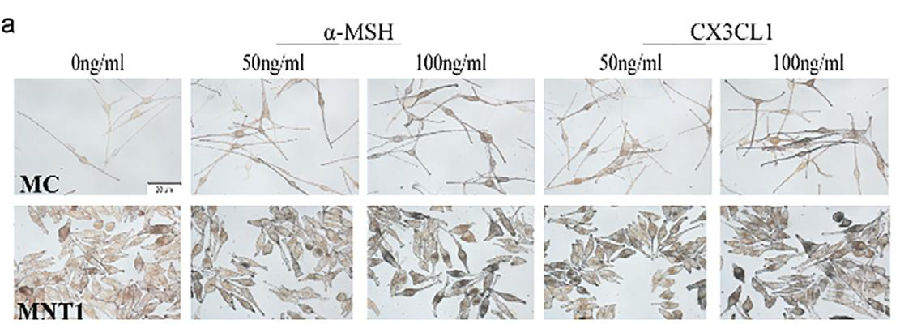
CX3CL1 can promote melanogenesis. a,b) MNT1 or MC cells were treated with α-MSH or CX3CL1: after 24 h, the melanin content in the cells was detected by Fontana-Masson staining (scale =20 µm), and quantitative analysis was performed using ImageJ (a);
03 ITGb3
产品货号:RPD353Mu01
产品名称:Slit同源物3(Slit3)重组蛋白
文献名称:Osteoclast‐Derived SLIT3 Mediates Osteoarthritis Pain and Degenerative Changes
杂志名称:Advanced Science
影响因子:14.1
PMID/DOI:41255240
发表日期: 11/19/2025
发表单位:中国空军军医大学唐都医院口腔科/口腔颌面重建与再生全国重点实验室
样本类型:小鼠三叉神经节细胞(TG)
应用类型:细胞培养
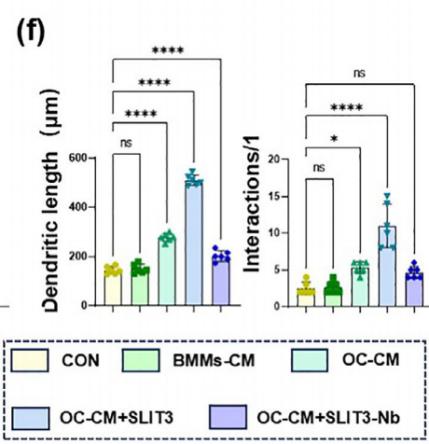
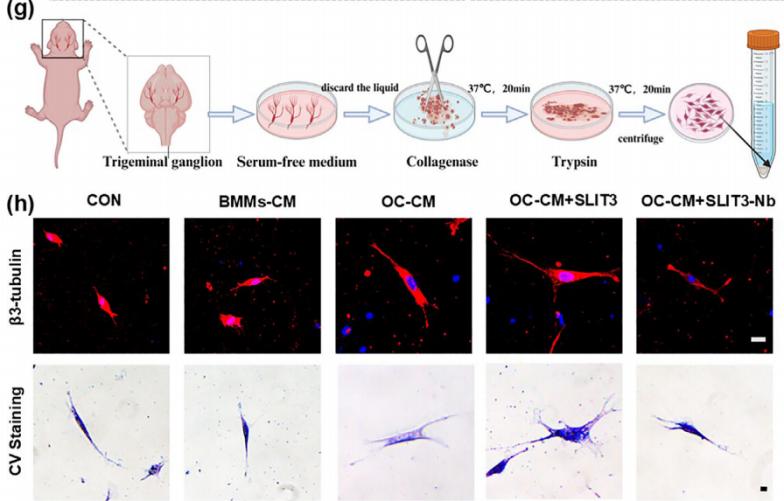
To further verify the role of osteoclasts, we added 500 µg mL−1 SLIT3 protein to the co-culture medium in vitro, which significantly promoted the growth of sensory neuron axons (Figure 6f–h).
Figure6 f) Quantitative analysis in panel (h). n = 6. g) Schematic diagram for extracting trigeminal ganglion (TG) cells. h) Representative microscopy images of TG cells after different treatments.